Visa AI Passport
A prototype of how an AI agent could pay on your behalf: a risk check, a one-use token and a stop button for every purchase.
Abstract
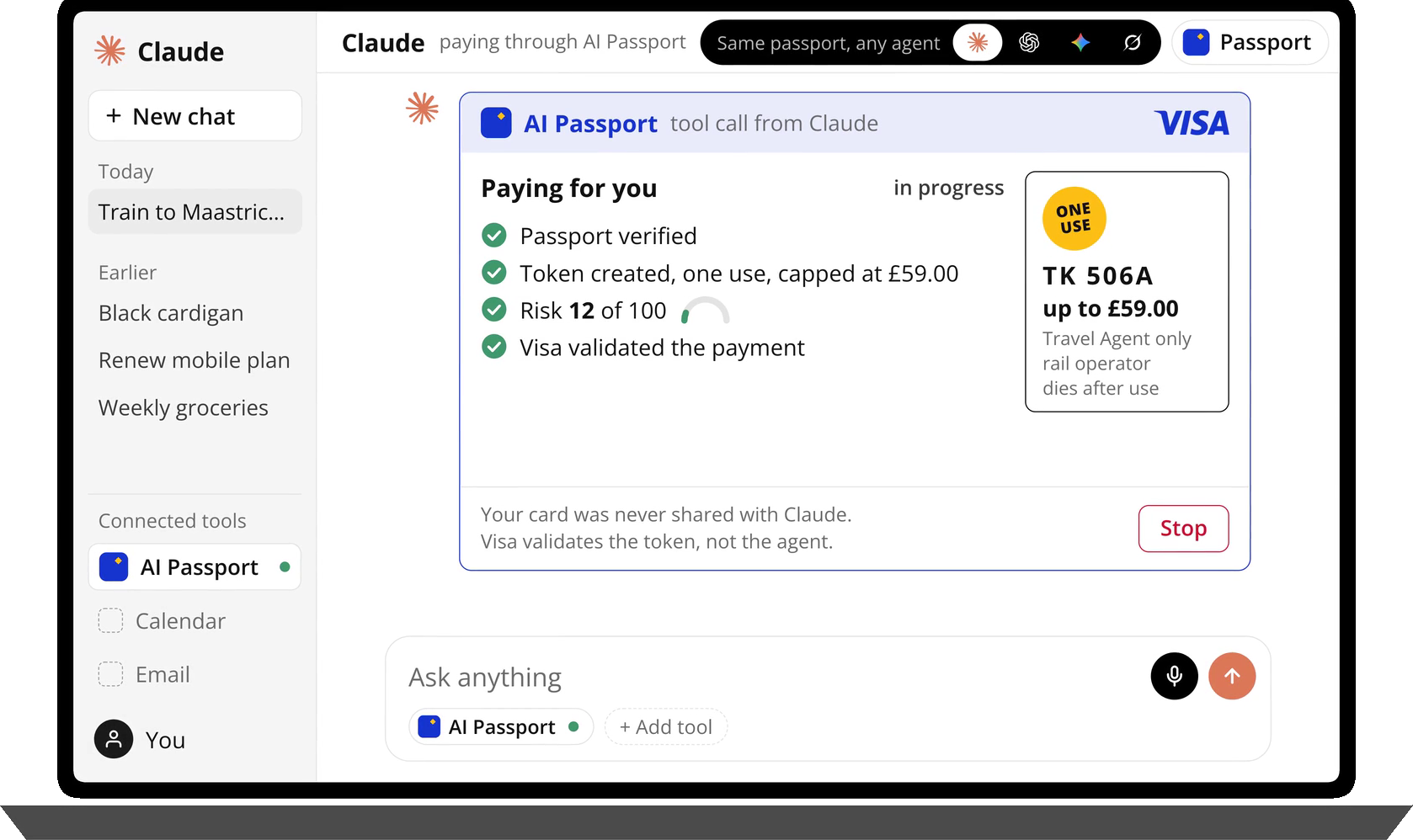
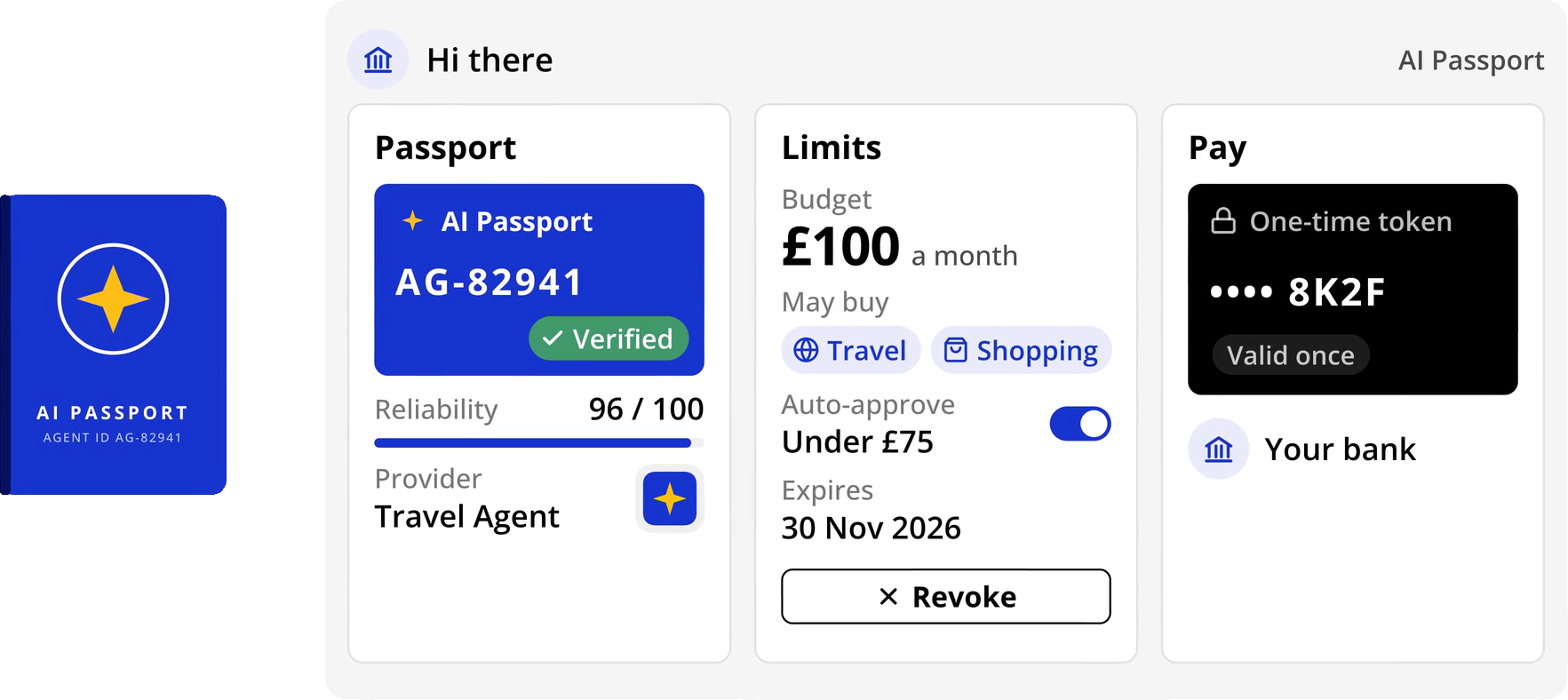
When an AI agent shops for you, someone has to decide whether it may pay. The AI Passport is a connector between any chat agent and the card network. The agent asks the passport before every purchase, the passport scores the risk, and only low-risk purchases go through without you. Anything else comes back to you for a yes or a no.
I built the working prototype in two days during the LSE sprint week, on a brief set by Visa, and made the film that explains it. A real language model runs the conversation, so visitors can ask for anything, by voice or text. Payments are simulated.
Technical overview
- Agent
- Claude Haiku with four tools: search offers, passport check, passport pay, passport status.
- Risk
- Each purchase is scored 0 to 100. At 40 or above the user approves once or declines.
- Payment
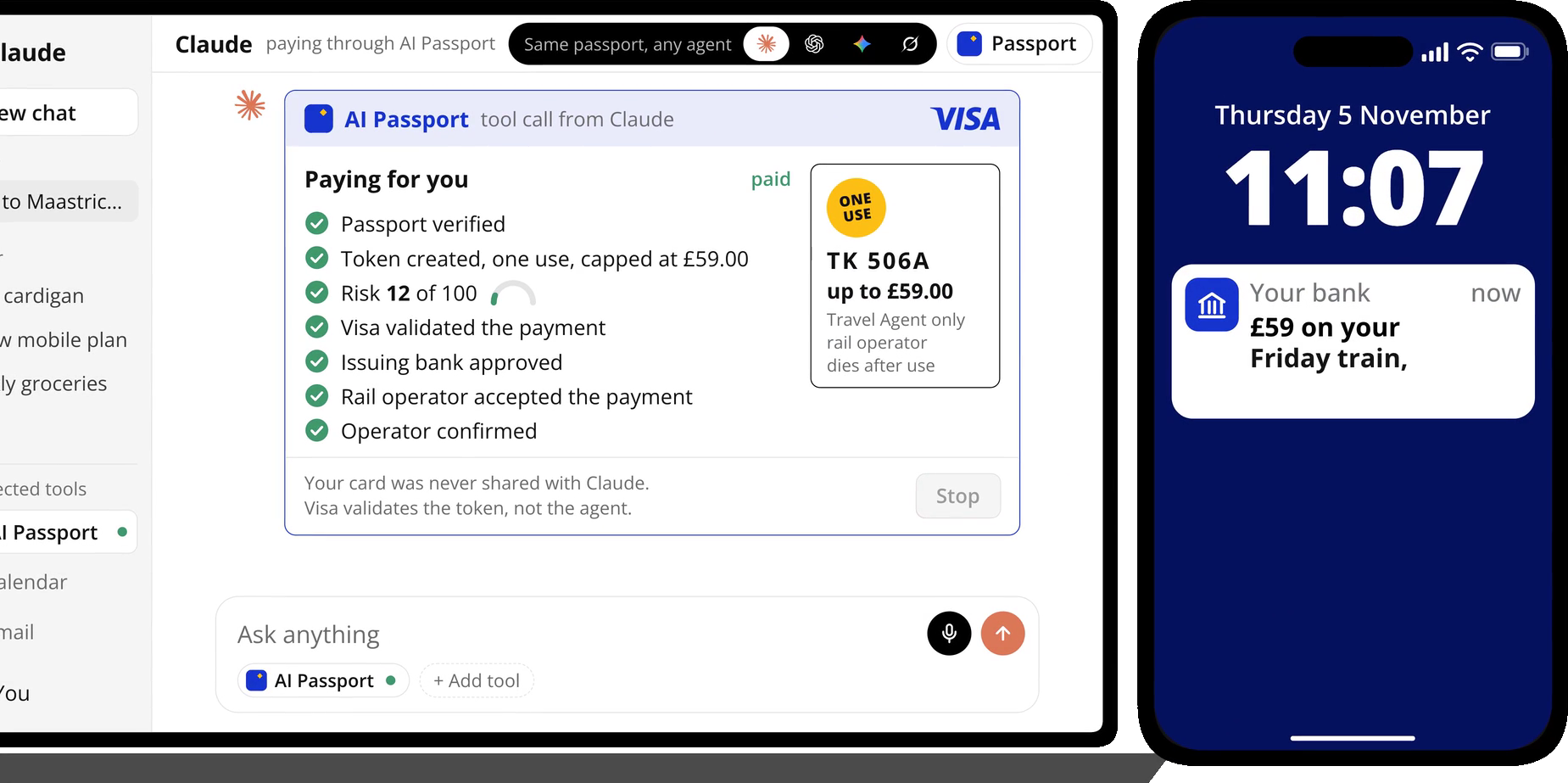
- A one-use token per purchase, never the card number. Stop still works for four seconds after settlement.
- Interface
- One chat shell that can dress as four different assistants, to show the passport travels with the user.
- Stack
- TypeScript on Cloud Run, 184 tests, usage caps per visitor and per day.
Class prototype from the LSE sprint week. Not an official Visa product.